mizzou capstone · design in progress
smart bandage
my capstone team and i are designing a wearable system that collects wound temperature and impedance readings and sends them wirelessly to a phone.
a team project with Tatem Poelma, Josephine Glaser, Akbarjon Kamoldinov, and AJ Baalmann, advised by Dr. Mohammad Haider at the University of Missouri.
why we're building it
we wanted our capstone to be a hardware project with a purpose beyond a demo. our aim is to make wound monitoring less dependent on removing the dressing just to collect a reading. we're focusing on temperature and electrical impedance, with the readings available on an external device.
the useful distinction is that we're designing a monitoring system, not a treatment device. we're not claiming it can diagnose an infection or improve healing. those would require evidence beyond a capstone prototype.
the system we're designing
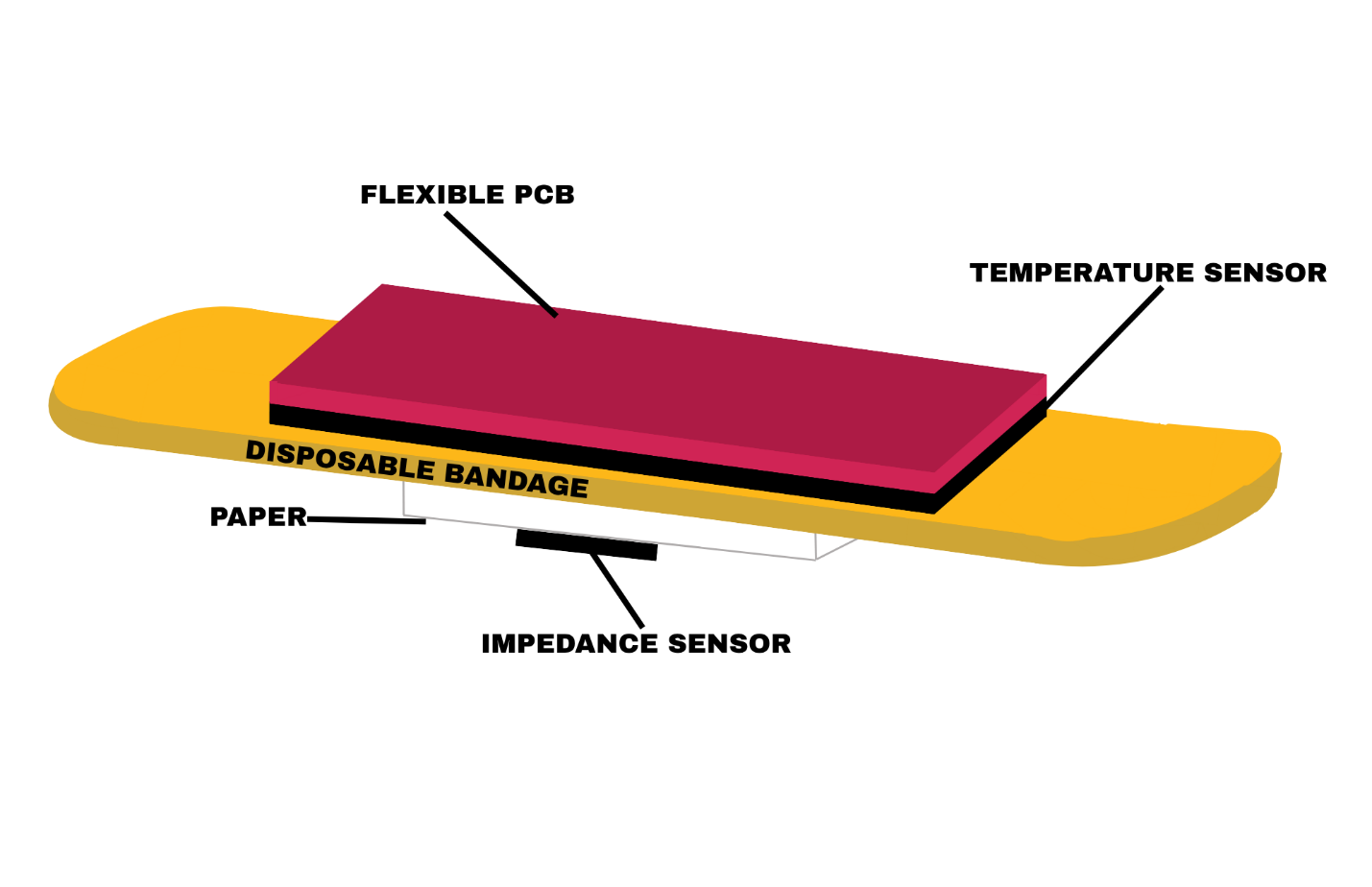
the proposed design separates the replaceable bandage from the reusable electronics. an impedance electrode sits on the wound-facing side, while a temperature sensor sits beneath the flexible pcb. the goal is to avoid throwing away the costlier electronics at every dressing change.
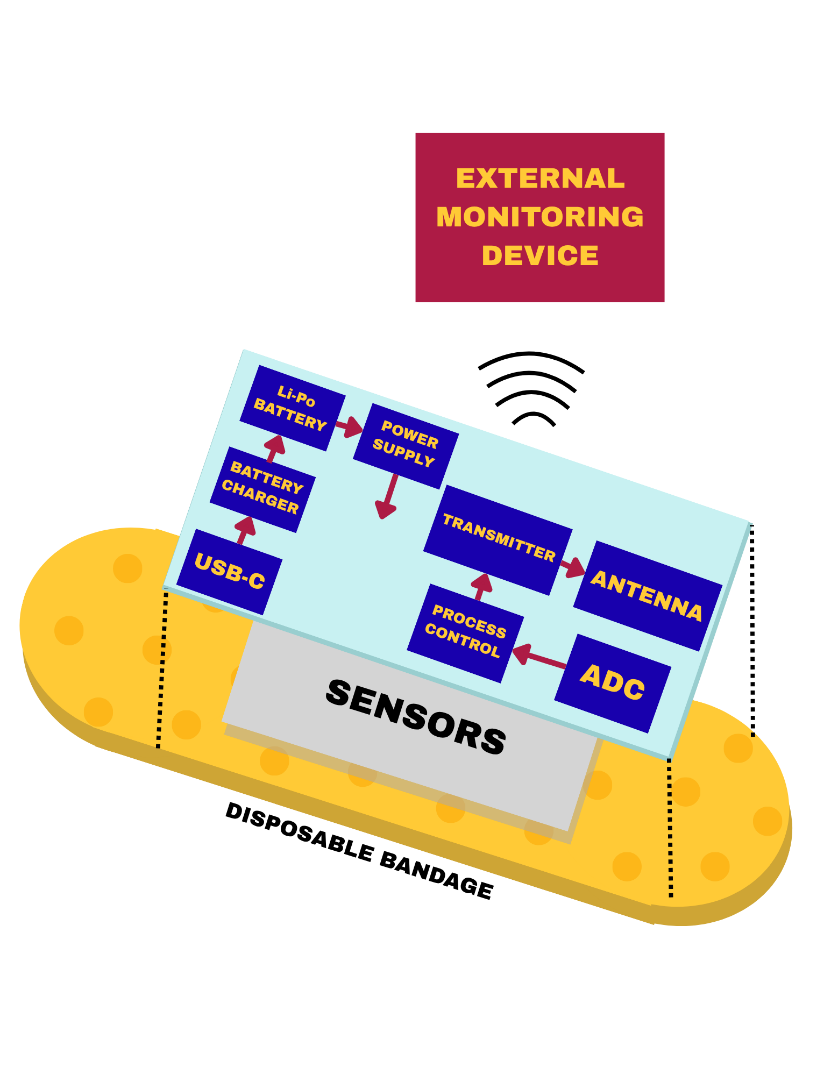
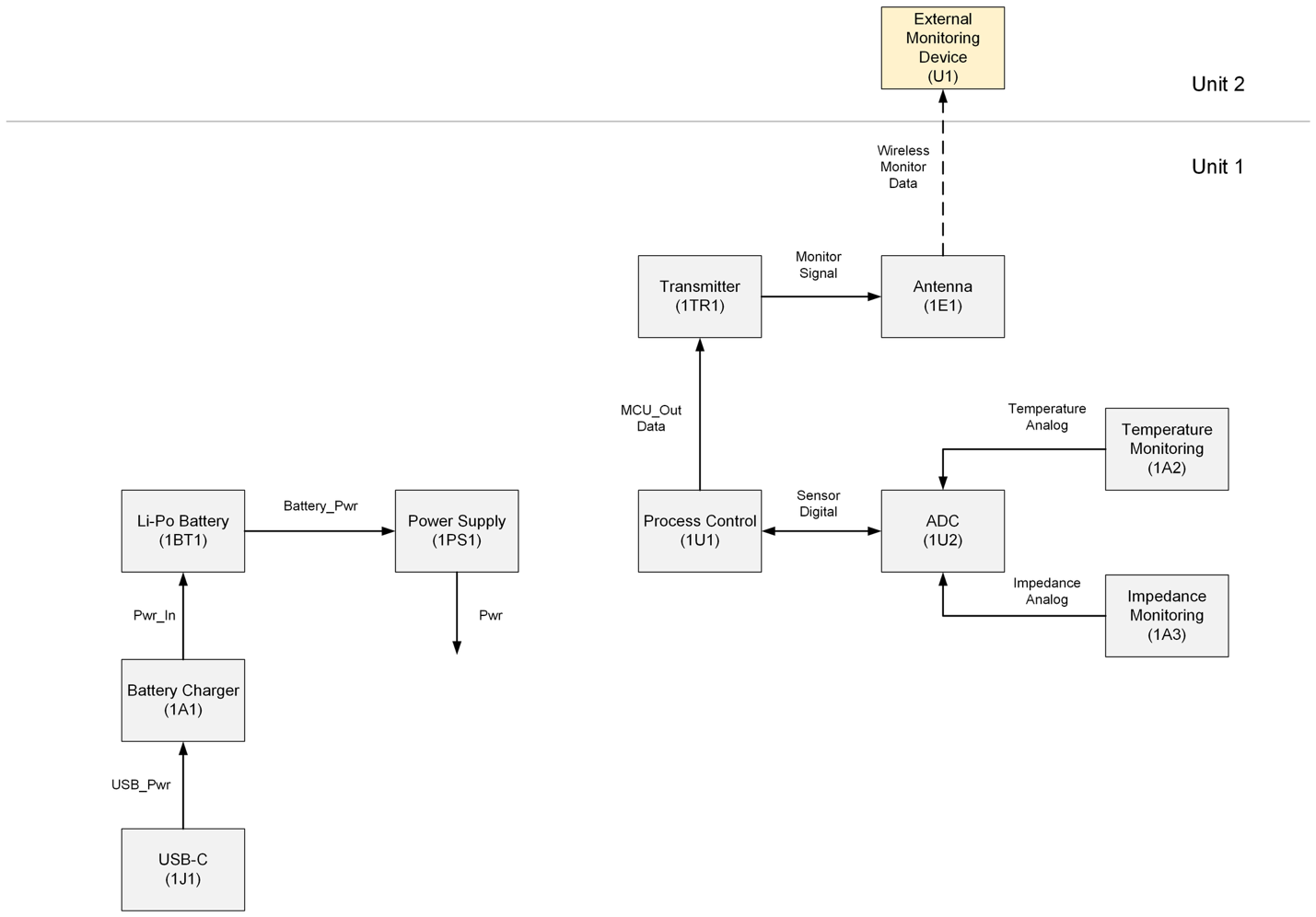
sensor readings go through an adc to the controller, then through the wireless transmitter to an external device. a rechargeable lithium-polymer battery powers the system, with usb-c charging. bluetooth low energy is our leading option for the phone connection, but the final implementation is still being worked out.
a few choices we made
we considered pH, bleeding, and pressure sensing before narrowing the scope to temperature and impedance. we also chose a rechargeable battery over wireless power, and monitoring over electrical stimulation. keeping the project buildable by four people mattered more than adding every possible feature.
inkjet-printed sensors on flexible substrates are our preferred approach, which fits the work in Dr. Haider's lab. commercial sensors remain a fallback if the printed ones don't perform reliably. that choice is still something we need to test, not a result we already have.
who's working on what
this is shared work. the responsibilities below are the proposed split in our capstone plan, not a list of finished components.
- Tatem Poelma
- charging and power electronics, the wound-monitoring application, measurement conversion, and data packets. Tatem also prepared the functional block diagram.
- Josephine Glaser
- adc hardware, shared controller work, sampling timing, and processor power modes. Josephine created the two product concept drawings shown above.
- Akbarjon Kamoldinov
- printed temperature and impedance sensors, the adc device driver, and integration of the vendor's wireless protocol library. i also wrote the proposal's brainstorming and work-assignment sections.
- AJ Baalmann
- shared controller work, the transmitter and antenna, the transmitter driver, and external-device integration. AJ also prepared the software architecture.
project advisor: Dr. Mohammad Haider. we'll be integrating and testing the system together as the design takes shape.
where we are now
we're in the design and proposal stage. the images on this page are our team's concept drawings, not photos of a finished bandage. we haven't established sensor accuracy, wireless reliability, or clinical performance yet.
the next step is to turn this into hardware: fabricate and characterize the sensors, bring up the electronics, and test the full path from a measurement to an external device. i'll add actual build photos, measurements, and the things we learn along the way as that happens.
this page is based on our team's proposed-implementation draft, Low-Cost Flexible Inkjet Sensors for Smart Bandages. it describes a student engineering project, not a medical product ready for use.